
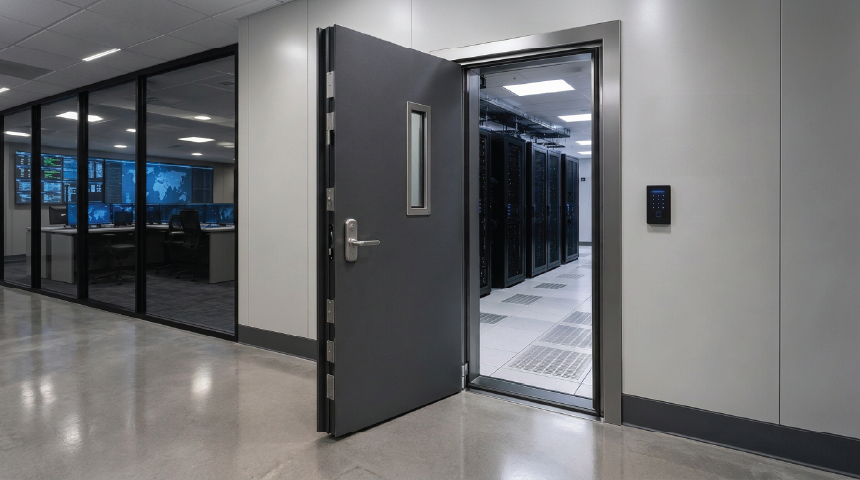
RF STC Doors for Enhanced Security Solutions
Conventional doors control physical access—but in secure environments, the threats don’t stop at what you can see. Sensitive facilities must also defend against unseen vulnerabilities, including radio frequency (RF) and electromagnetic signals that can carry information beyond protected spaces, as well as sound that can compromise sensitive conversations. While RF and IR shielding films can help prevent electronic eavesdropping from outside a building, security concerns can also exist inside the facility itself. That’s where RF/STC doors become critical, providing a vital layer of protection between secure spaces and the unseen signals and sound that could compromise them.
If you manage or operate in such an environment and sound and RF protection is a priority, specialty doors can help meet your attenuation goals. RF, STC (Sound Transmission Class) or combined RF/STC doors can address multiple security requirements in a single application. Read on to learn more about how RF/STC doors can help secure your sensitive environment, why proper door assembly matters, why you shouldn’t overlook proper installation, and why Signals Defense (a division of Lockmasters) is the ideal partner on your next project.
What you need to know
Which door is best for your facility: RF Door, STC Door, or combination RF/STC Door?
What are RF Doors?
RF doors, or frequency-shielding doors, are designed to minimize or fully eliminate electromagnetic energy passing through certain openings. Unlike a conventional door, which is commonly made of wood or metal and only serves as a physical barrier, RF doors are crafted from conductive materials and fabrics to block RF signals.
What are STC Doors?
While RF doors limit the passage of electromagnetic energy, STC doors limit sound. More specifically, STC is a rating that describes the ability to reduce airborne sound transmission. The higher the STC rating, the better the performance. Many people incorrectly think that good acoustic performance is about door density, but assembly is just as important. In addition to door construction, the frame, sealing, threshold, hardware used, installation and surrounding wall construction are other important factors in acoustic performance. We’ll discuss more on these factors later in this piece.
An STC rating of 50 or higher is typically considered excellent sound mitigation. This rating is significantly higher than a standard hollow door, which usually has an STC rating in the 25-30 range.
RF/STC Doors
To maximize door performance and eliminate or limit both acoustic and electromagnetic energy transmission, RF/STC doors are an option. While RF doors and STC doors are different products, they’re often combined into a single assembly for sensitive environments.
Good acoustic performance keeps sensitive conversations confidential, while RF shielding helps prevent electronic eavesdropping. At Signals Defense, our RF/STC doors are designed for Sensitive Compartmented Information Facility (SCIF) and TEMPEST environments to ensure maximum protection. TEMPEST environments are secure physical spaces that are engineered to mitigate electronic devices from unintentionally leaking sensitive data.
Common Applications
Some of the most common applications for RF, STC or RF/STC doors are environments where any verbal communication or electronic eavesdropping could have dire consequences. These environments often include:
- Data centers
- Government facilities
- Military buildings
- Research labs
- Healthcare facilities
- Specialized communication and technology spaces
How to choose the right door
How do you know what door to select? Here’s a checklist for both RF and STC doors that you should follow:
- Do you have a required STC rating for acoustic performance?
- Do you have required RF shielding performance requirements?
- Can the surrounding wall support the door assembly and installation?
- Is there any special locking or access control hardware required?
- Will it be a single or a double door? Will the door inswing or outswing?
- Do you have to meet any other requirements (i.e., SCIF, TEMPEST, ICD-705, etc.)?
At Signals Defense, we make it easy to get the right Lockmasters door for your next project — just get started by visiting our RF/STC Door page and send us key details about the door, including the door type, wall details, hardware and security preferences, and accessories, to receive a free quote.
Why Does Door Assembly Matter?
Physical security is about more than just the door. Assembly and the quality of the surrounding components matter just as much for RF and STC doors, and performance can be compromised if other components are not up to snuff.
Yes, the door itself is important and must be properly constructed to meet quality and performance standards. But some of the other components that also must be considered include:
- The door frame: The frame must complement the wall and door assembly.
- Seals: High-quality RF/STC doors feature perimeter acoustic seals, which help close potential sound transmission paths.
- Hardware components: Components such as locks, hinges, closers, strikes and more must also be compatible with the door to help — and not hinder — acoustic and electromagnetic energy requirements.
- Wall construction: Don’t downplay the importance of the surrounding wall to the door’s integrity.
Lockmasters doors all address frame construction, seals, hardware, and other components in the full scope of the door to ensure that you’re getting the performance your facility wants and needs.
The Importance of Proper Door Installation
A good door won’t make up for poor installation or a bad opening — and it’s why RF/STC door installation needs to become a part of your security solution. Signals Defense is a division of Lockmasters Inc, and the Lockmasters Security Institute serves as the premier resource for professionals who need hands-on training for more specialized door installation.
Lockmasters Security Institute offers dedicated two-day SCIF Acoustical Door and SCIF/RF Door Installation courses, which cover topics including:
- TEMPEST fundamentals
- Proper wall construction
- Receiving and storage
- Inswing and outswing installation techniques
- And more
Contact Signals Defense
Lockmasters and its various brand divisions work together to provide a full-service security solution. Lockmasters introduced the ORIGINAL SCIF Door in a Box program in 2004 to provide a true ready-door solution that meets ICD-705 compliance. Contact us today to learn more about door solutions, and our education offerings through the Lockmasters Security Institute.
Related Blog Articles

Electromagnetic Fields (EMF) and Why Shielding Matters
Electromagnetic Fields (EMF) and Why Shielding MattersMany properties and...
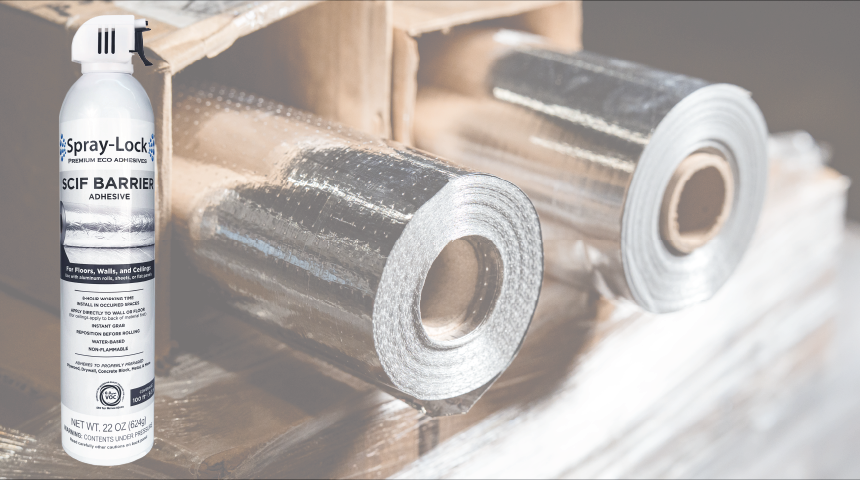
Spray-Lock SCIF Barrier Adhesive
Revolutionizing Adhesion - One Spray at a Time To install wall panels and...